Our first physical hackathon put four mathematics students into a software-first environment with very little web development experience. The useful lessons came from the messy parts, especially ideation, mentoring, and pitching.

I found myself staring at my phone, thumb hovering over the share button. "Am I really qualified for this?" I thought to myself. "What if we make fools of ourselves?" The doubts crept in like unwanted guests. But then another voice, stronger and more determined, pushed back: "When else will we get a chance like this? We might not be coders, but we know how to solve problems. Isn't that what hackathons are really about?"

I reached out to my fellow mathematics coursemates: Janice, Roius, and Gwyn. "Hey, want to do something crazy?" I asked, half expecting them to laugh it off. To my surprise, their responses came quickly, filled with enthusiasm despite (or maybe because of) our collective inexperience. Only 2 of us had ever participated in a hackathon before, and Gwyn had never even written a line of code. But there we were, four mathematics students from UTAR, signing up for one of the most competitive hackathons in the country.

The looks we got when we arrived were priceless. "Are you guys from Computer Science?" someone asked, eyeing our team with curiosity. We exchanged glances and grinned. "Nope, we're Math students, haha..." The mixture of surprise and skepticism on their faces was something I'll never forget. In those moments, our outsider status felt both terrifying and strangely useful.

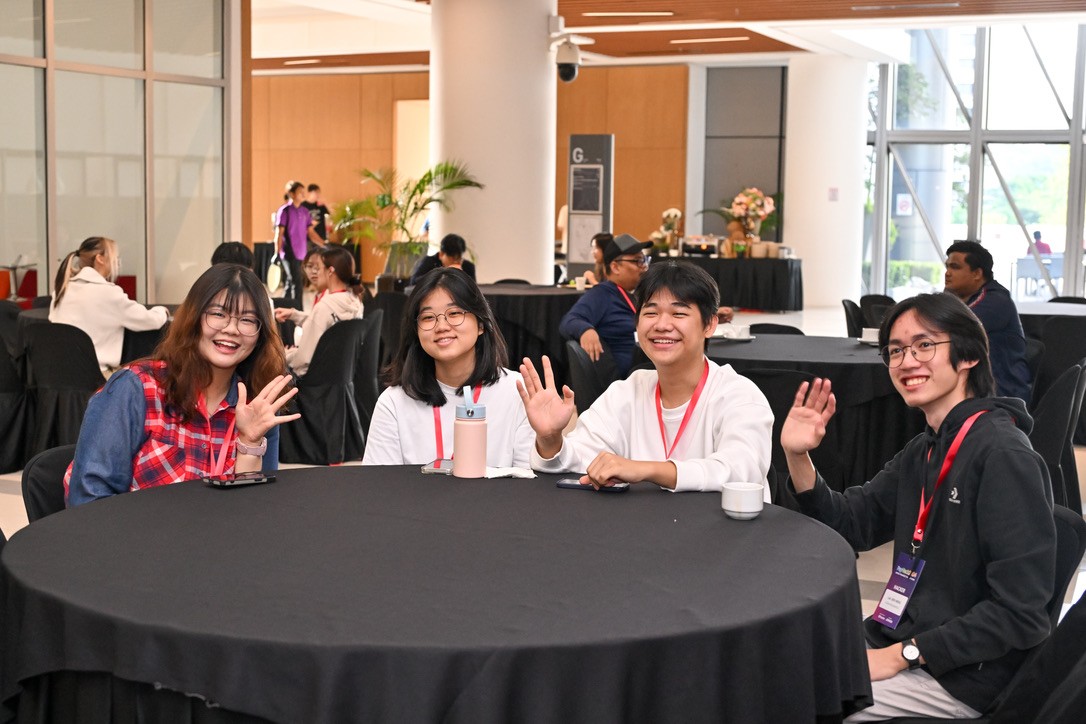
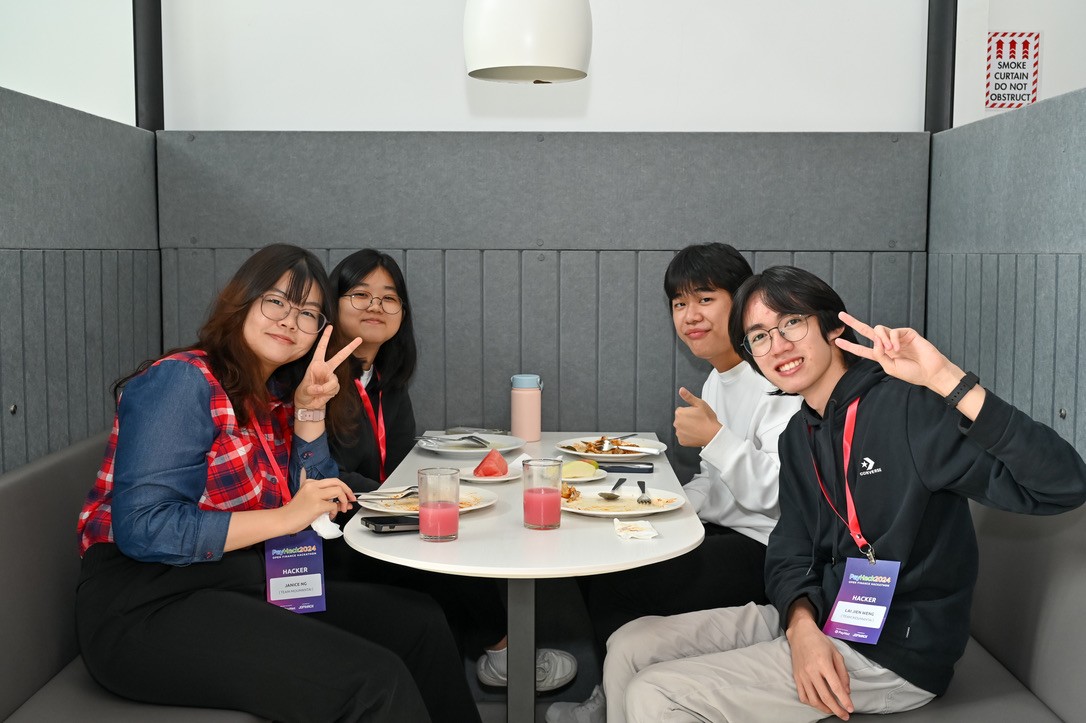
Our first breakfast together at PayHack 2024 - nervous but excited! The calm before the storm.

November 30th marked our first day, and it was a blur of ideation and learning. We came up with an idea for an app that visualized transaction carbon footprints and pooled the estimated surplus for trading. On paper, it combined fintech with environmental accounting.

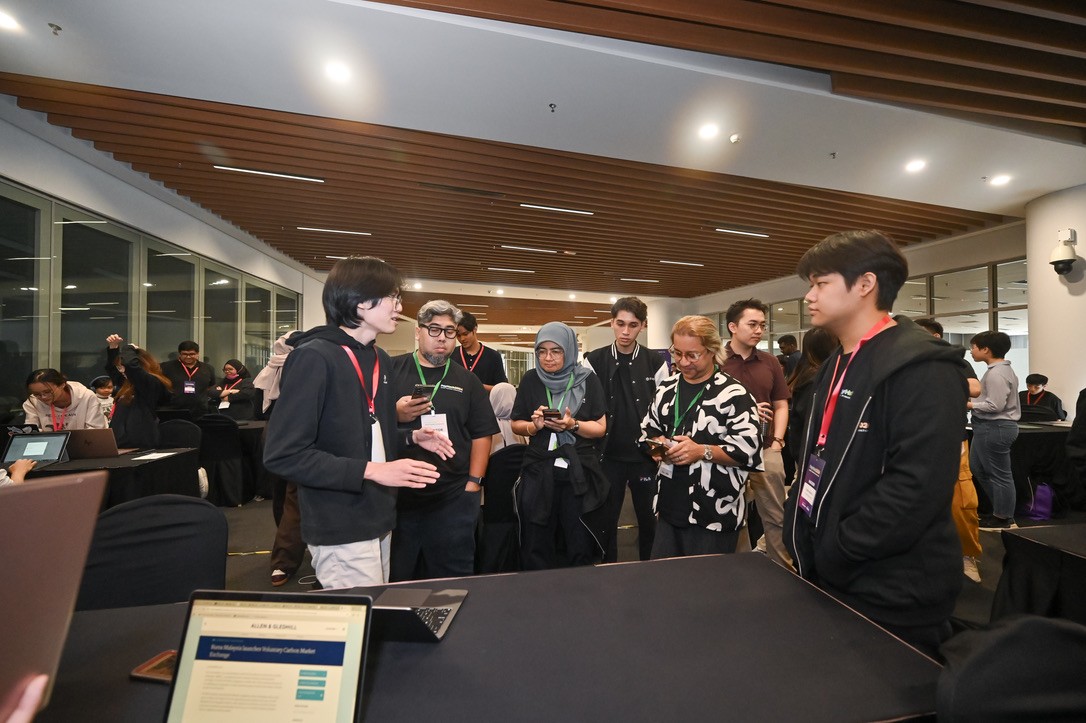
Getting grilled during our mentoring session - each question pushed us to think deeper about our solution

Then came the intense mentoring sessions with Johan Nasir. He didn't hold back. "What happens if the carbon credits are manipulated?" he'd challenge. "How do you ensure the authenticity of the footprint data?" Another round of rethinking. Each session felt like an intense rotan session, with tough love at its finest. He'd poke holes in our solutions, push us to think deeper, and force us to confront real-world problems that actually needed solving.

The week before the hackathon was a rollercoaster. Competing against almost 100 teams from across Malaysia, we were shocked to make it to the Top 32. When we saw Johan's name among our judges and received the news of our advancement, our excitement was through the roof. But reality quickly set in: we had a major problem. None of us had real web development experience. My knowledge was limited to Python, SQL, and vanilla HTML/CSS/JavaScript.

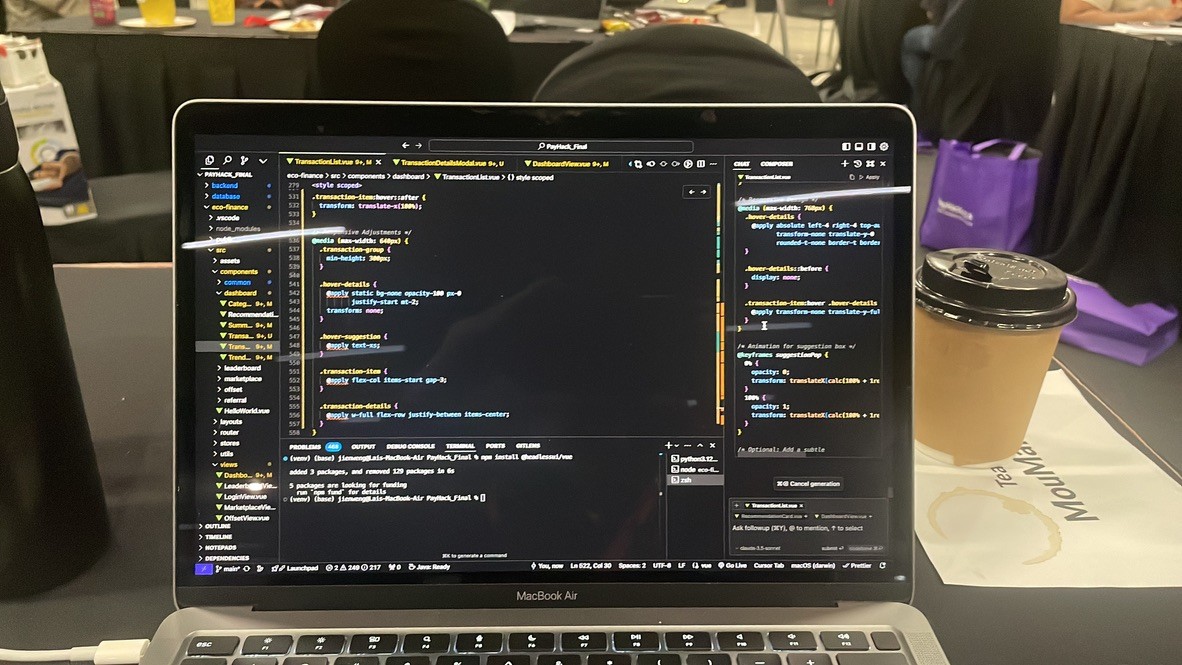
With four days between Tuesday and Friday, we had to make technical decisions while juggling our internships. After researching our options, we settled on Vue.js and Flask. Janice even travelled from JB to KL for this. Every evening after our internships, we'd work through tutorials and try to learn the stack quickly.

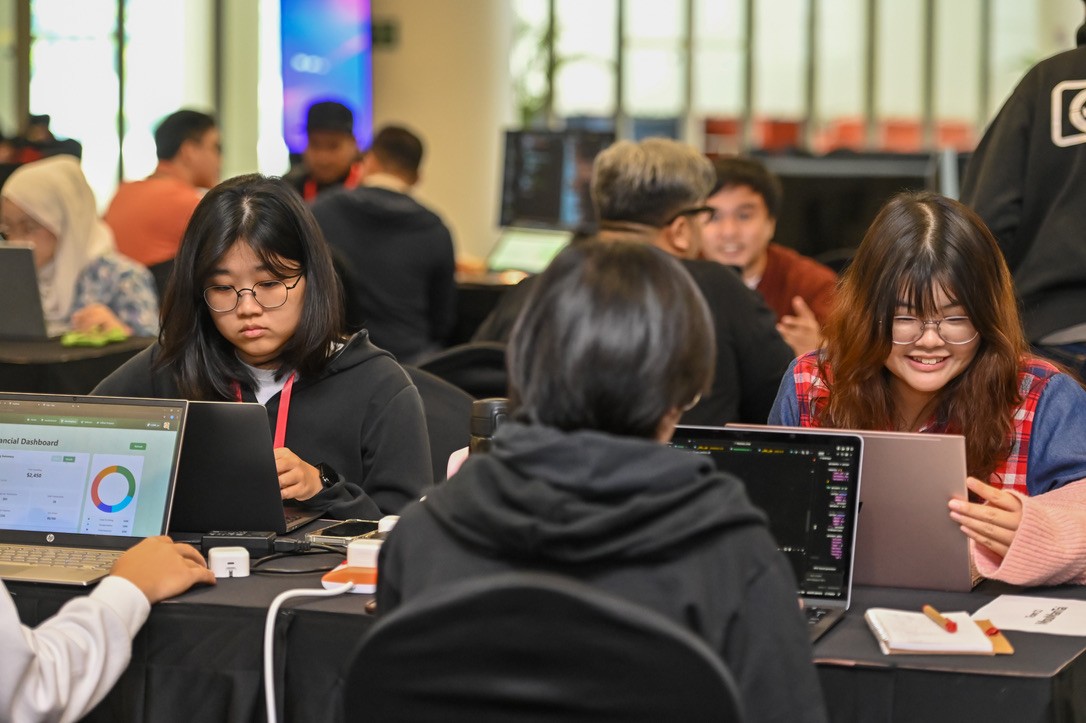
3 AM and still debugging - running on determination and coffee

The hackathon itself was intense. When exhaustion hit, we took turns napping wherever we could. I couldn't get a tent, so I made do with a random bench for quick 4-hour power naps before jumping back into coding. Everything seemed to be going smoothly until the morning of the submission. At 8:30 AM, just after breakfast and 90 minutes before the deadline, our backend crashed because the information couldn't be parsed properly. In a desperate move, we had to hardcode some components just to make the submission deadline at 10 AM.

Presenting our final product: MouManTai - tracking and trading carbon footprints from financial transactions

We did not make the Top 10, but the final pitches showed me how much the business case shaped the strongest projects. One team's blockchain remittance system stood out because its regulatory research and market validation were as careful as its technical work. I left thinking, "Next time, we need to validate the market earlier."

The top teams also presented much better than we did. Their pitches connected each feature to a business problem, their demos survived the pressure, and they knew their numbers when the judges pushed back. I made mental notes: "Practice the pitch more. Know your numbers. Be ready for any question."

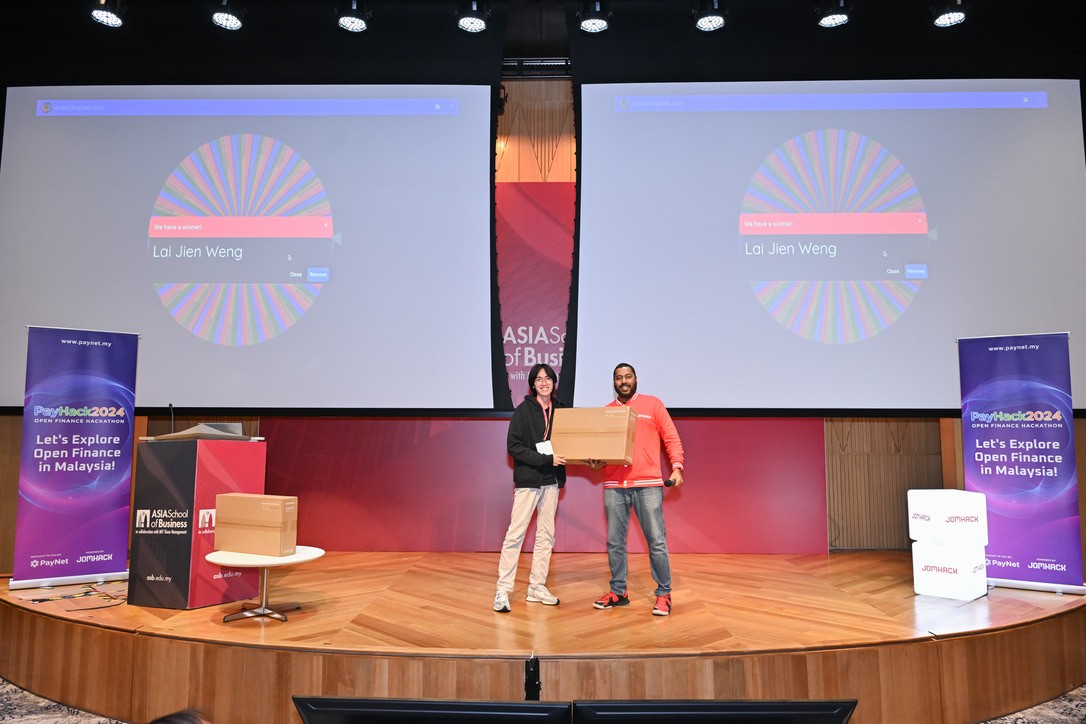
Despite not making the finals, I did win a Samsung monitor in the lucky draw, a small consolation that brought some laughs to our tired team.

A silver lining - winning a Samsung monitor in the lucky draw!

Looking back now, the sleepless nights and debugging sessions blur together. I remember the late-night breakthrough when our first feature worked, Johan's smile during the final presentation, and the four of us trying to keep the demo alive.

Jien Weng, Janice, Gwyn and Roius

Janice, Roius, and Gwyn took the risk with me even though most of us had never built a web product. Johan kept asking the questions we wanted to avoid. PayNet and JomHack gave four mathematics students a place to test whether our ideas could survive outside a classroom.

The equations and formulas we studied were not enough on their own, but they helped us break down a problem, test assumptions, and keep going when the interface failed. We did not become software engineers in 24 hours. We did learn that four mathematics students could still build something and present it.